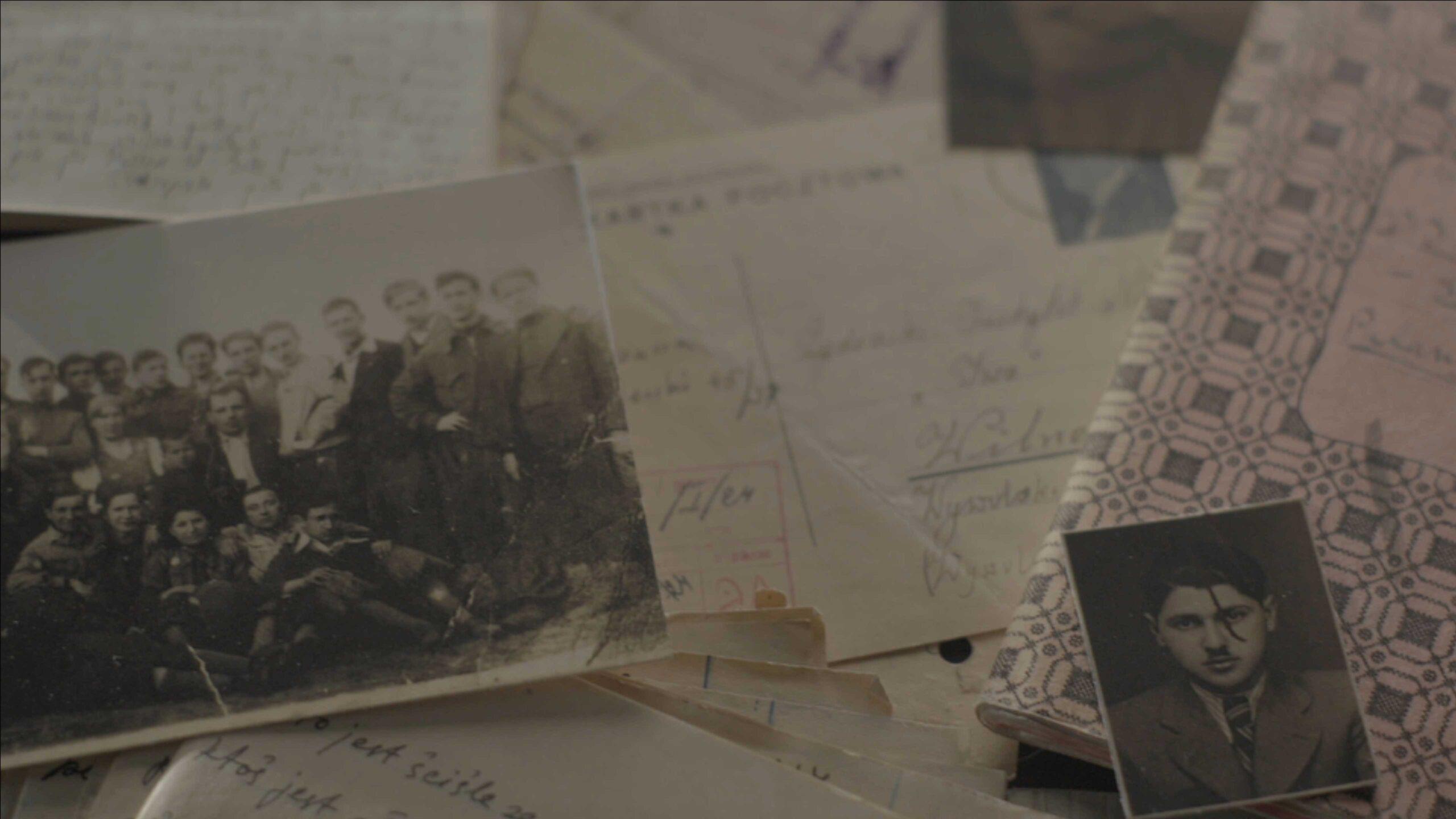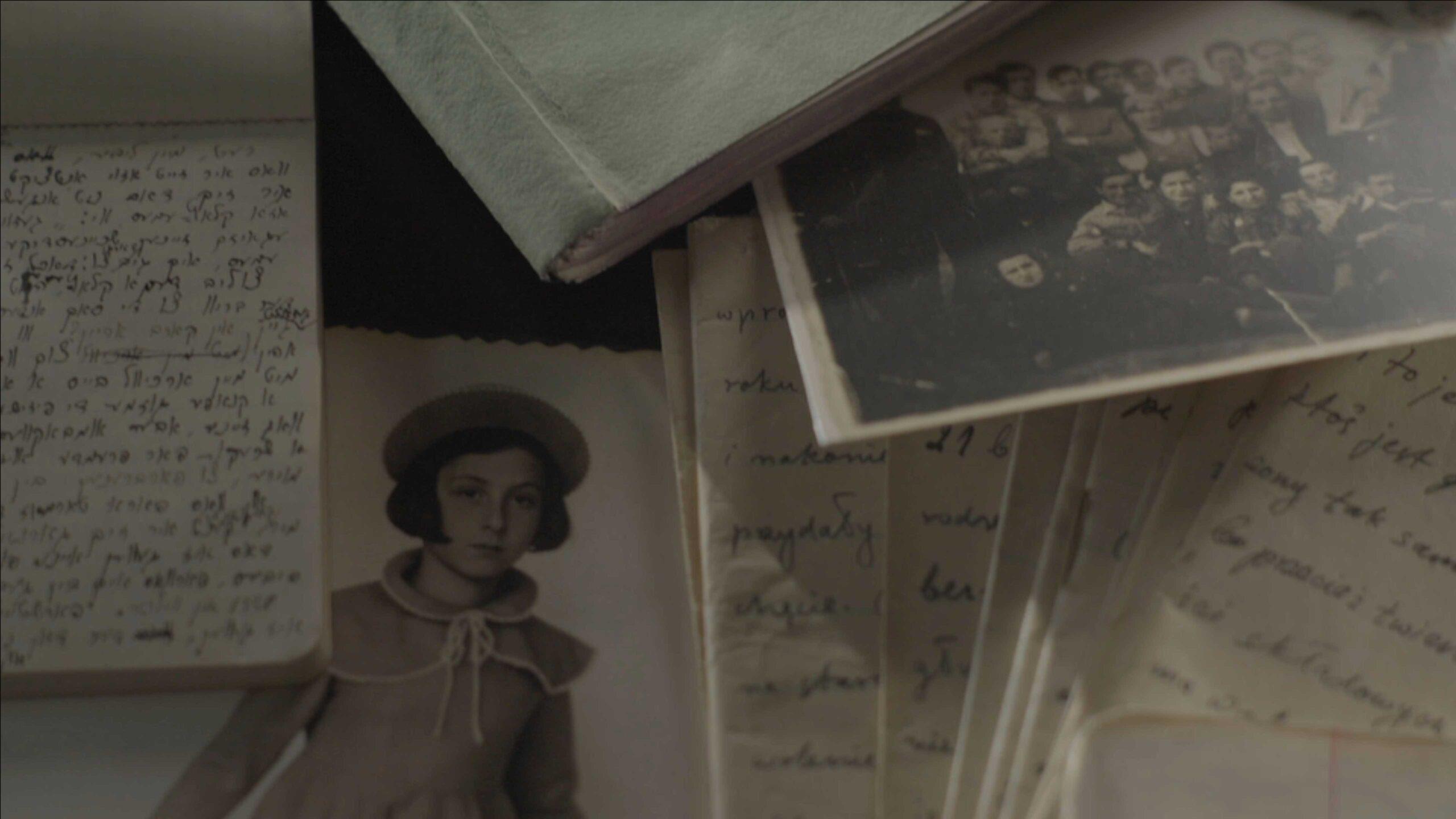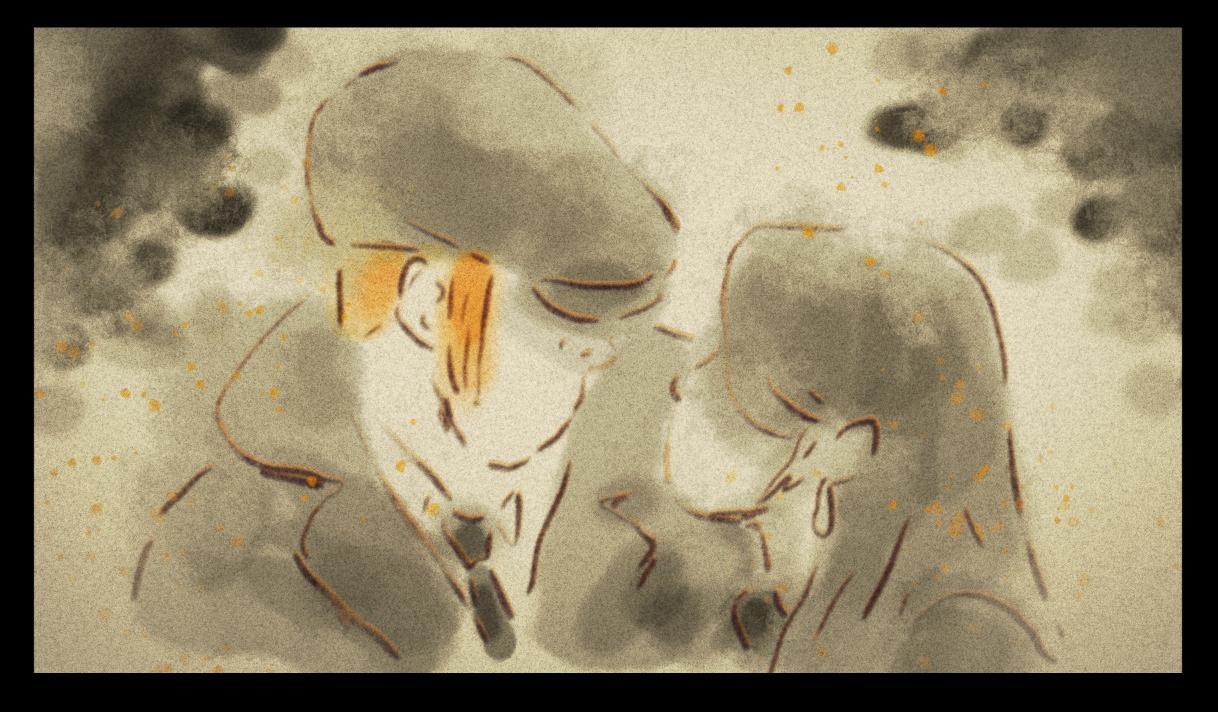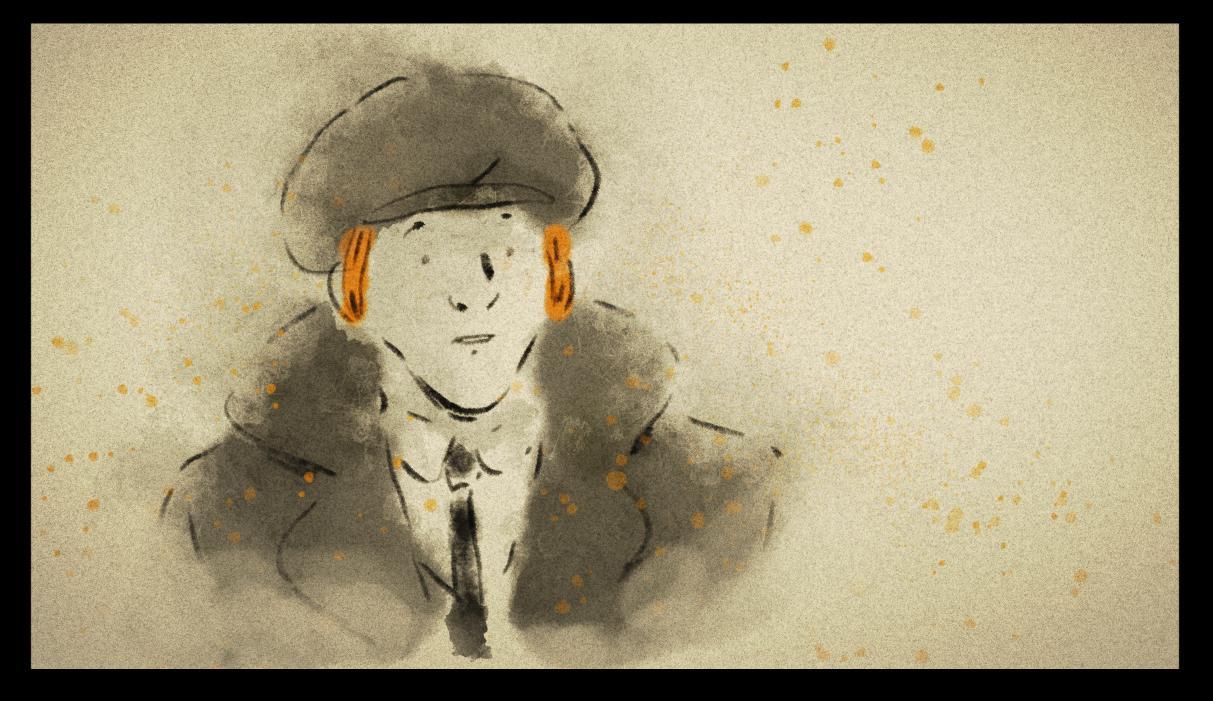
Based on miraculously rediscovered autobiographies, this film gives voice and life to the vanished youth who populated Yiddishland in the thirties, before the Holocaust. Their lives as Jewish teenagers, their aspirations and dreams, and their anxieties in the face of the tragedy they foresaw, bear witness to this lost world.
Synopsis
In the heart of Europe, an ill-defined continent was populated by 11 million Jews. A continent without borders, Yiddishland—a world forever buried in the Holocaust.
In 2017, 180,000 pages of texts written in Yiddish reappeared in Vilnius. These pages, hidden by the Paper brigade, forgotten for 80 years, were found in an abandoned church. Among these were 350 autobiographies written by young Jewish people aged between 16 and 22. They had been encouraged to write about themselves, without shame or restraint, as part of a competition for “the best autobiography of a young Jew” launched by the YIVO in 1932, 1934 and 1939.
They were religious, atheists, urban or rural dwellers, educated or not, working-class or well-off, ultra-orthodox or secularists, Zionists, anti-Zionists, feminists, socialists, or evolving from one condition and conviction to another, as historical events unfold.
In a polyphonic narrative, the film conveys their words, illustrated by a rich corpus of archive footage, including amateur and family home movies, as well as Yiddish cinema.
These lost voices, rescued from oblivion and remnants of a world soon to disappear, give us a glimpse into the concerns, inner conflicts and dreams of the last generation of Yiddishland teenagers.
About the Director

Jonathan Hayoun
Jonathan Hayoun is an author, filmmaker and essayist. The mediation and intercultural dialogue work he has carried out for years in schools and universities against prejudice, racism and anti-Semitism, has nurtured his approach, which is fulfilled today in documentaries and books. His work explores questions of identity, cultural heritage and collective memory and has been praised for its commitment and historical value. He is the co-author of several books, including “The Hand of the Devil: how the Far Right tried to seduce French Jews” (winner of the 2019 International League Against Racism and Anti-Semitism Award) and “The Book of Jewish Humor” (2023). He has directed a number of documentaries, including “Anti-Semitism, 2000 Years of History” (ARTE, 4×52′, 2022). This series received grants from major institutions including the Claims Conference, it was widely distributed internationally, received great reviews and remains the 2nd best audience for a documentary series on ARTE.
Artistic Statement
My knowledge of this vanished world has been built mainly through the works of great writers, the testimonies of survivors and the work of historians. The discovery of this valuable corpus of biographies has completely changed my perception of the lives of young Jews in the 1930s. Written, for most of them, without any awareness of the catastrophe to come, these accounts take on a whole new dimension with the benefit of History’s hindsight. They offer an intimate experience of those years, which no historian’s account or perspective could ever convey in quite the same way.
My documentary work has acquainted me with the stories and archives that are central to this project and convinced me of the importance of highlighting personal stories. These autobiographies which reveal the questions and doubts, the need for emancipation of these young people, resonate with today’s youth in a powerful and universal way.
Year
In post-production
Film Type
Documentary/Animation
Film Length
104 minutes
Language
French
Production Countries
France
Poland
Director
Jonothan Hayoun
Producers
Félicie Roblin
Rafael Lewandowski
Director of Photography
Editor
Isabelle Martin
Subject Region
Lithuania
Production Companies
ZADIG Productions
VERTIGO
Researcher
Céline Le Roux-Vincent
Funding
With Assistance from Conference on Jewish Material Claims Against Germany
Funded by the German Federal Ministry of Finance
Other Funders
ARTE France
CNC, French National Center for Cinematography
MEDIA Creative Europe
Fondation pour la Mémoire de la Shoah
European Jewish Foundation
Procirep/Angoa
TVP, Telewizja Polska
FINA, Filmoteka Narodowa Instytut Audiowizualny
Lutetian Arabians, Poland
Stills